The Ancient Hairless Dog of Mexico



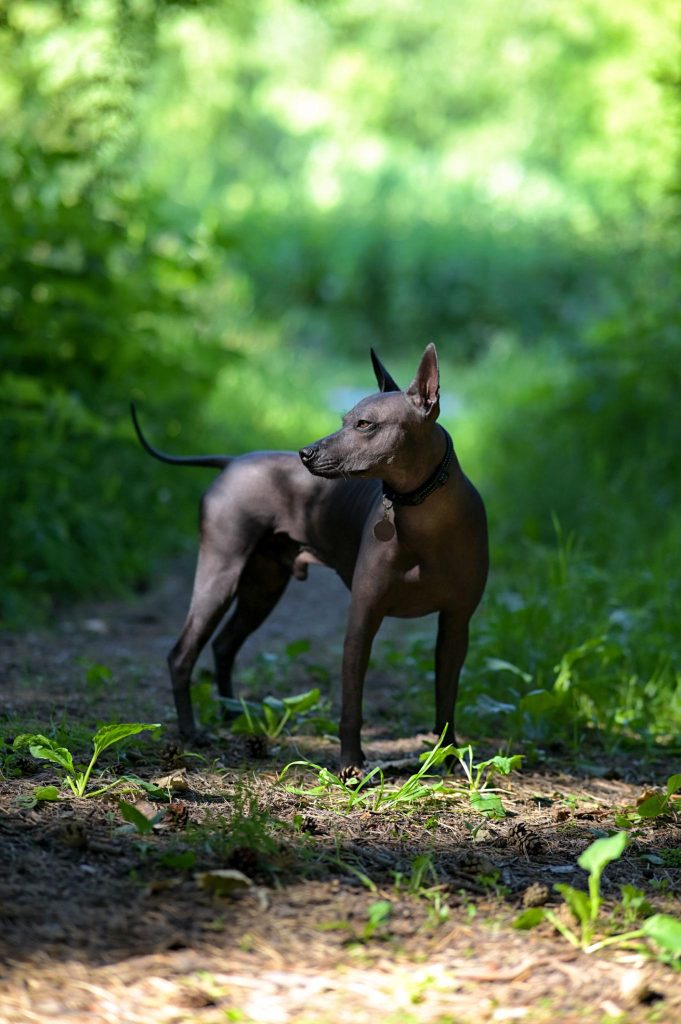
Mexico’s national dog breed.
Other names: Xoloitzcuintli, Xoloitzcuintle, Xolo, Mexican Hairless Dog, Perro sin Pelo Mexicano, Mexican Hairless, Xolo dog, Xoloitzcuintli dog, Xoloitzcuintle dog
The Xoloitzcuintli (pronounced show-low-eats-QUEENT-lee) is one of the oldest dog breeds in the world and one of the most historically important of all hairless dogs. Often called simply the Xolo, this breed comes from Mexico and has been part of human life there for thousands of years. Ancient artifacts and long-standing tradition connect the Xoloitzcuintli to Mesoamerican cultures and to spiritual beliefs about protection and guiding souls after death.
Today, the Xoloitzcuintli still stands out among hairless dog breeds, but not just because of its appearance. This is an ancient, thoughtful, watchful companion with a calm presence and a deep bond to its people.
Quick Facts About the Xoloitzcuintli
The Xoloitzcuintli comes in three sizes: toy, miniature, and standard. It also comes in two varieties: hairless and coated. The coated variety has a short, smooth coat, while the hairless variety has exposed skin that requires regular care.
The breed has a lean, elegant build, upright ears, and an alert expression. Xolos look refined rather than heavy, and even the standard size keeps a graceful outline.
Appearance and Skin
Most people first notice the Xolo’s skin, which gives the breed its striking and sculptural look. Hairless Xolos may appear in dark, slate, bronze, liver, or reddish shades, sometimes with mottling. The coated variety is fully covered in short hair and looks quite different at first glance, even though it is the same breed.
Hairless dogs do not need fur grooming, but that does not mean they are maintenance free. A Xolo’s skin needs regular attention to stay healthy and comfortable. Owners should understand basic hairless dog skin types, use a sensible bathing routine, and be prepared for moisturizing when dryness appears.
Because exposed skin is vulnerable, many Xolos also need help with sun protection and may benefit from an essential wardrobe for hairless dogs in strong sun or cold weather.
Temperament: Quiet, Loyal, and Watchful
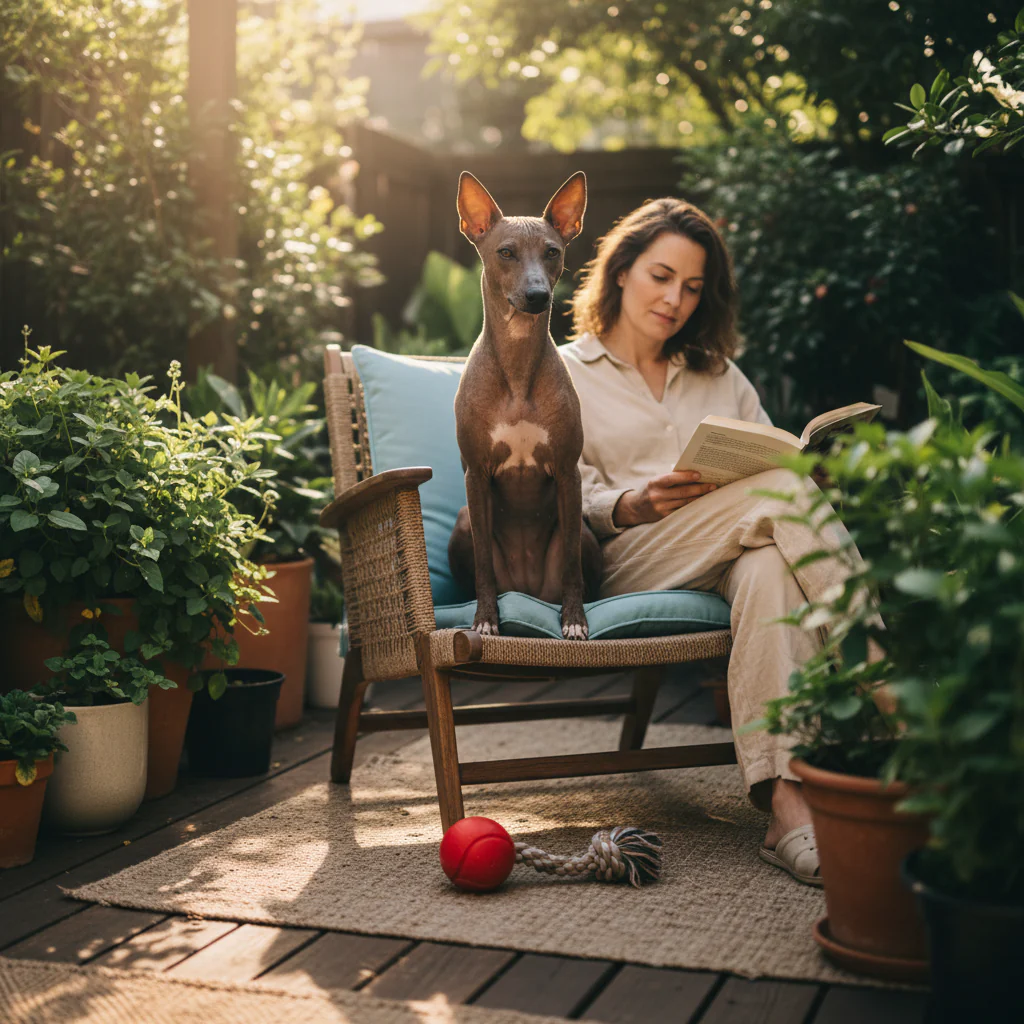
The Xoloitzcuintli is usually calm, observant, and deeply loyal. This is not typically a clownish or overly social breed. Xolos tend to bond strongly with their family and may be reserved with strangers. That reserved nature does not make them unfriendly, but it does mean they usually prefer to assess people before warming up.
In the home, many Xolos are affectionate and emotionally sensitive. They do best with a stable environment, gentle training, and owners who appreciate a thoughtful companion rather than a constant entertainer.
Exercise and Daily Life
Xolos need daily walks, play, and mental engagement, but they are not usually extreme exercise dogs. They are athletic enough to enjoy activity while still fitting well into calmer households. Smaller Xolos can adapt nicely to apartment life if their exercise and companionship needs are met.
Like many hairless breeds, they do best when fully included in family life rather than treated like decorative pets.
Health and Dental Considerations
The Xoloitzcuintli is generally considered a robust breed, but owners should know that the hairless trait is tied to dentition. Hairless Xolos commonly have missing teeth, especially premolars. This makes dental care for hairless dogs especially important.
Some hairless dogs may also be prone to clogged pores or breakouts, so it helps to understand common issues like acne in hairless dogs and how daily skin management can prevent problems.
A Brief History of the Xoloitzcuintli
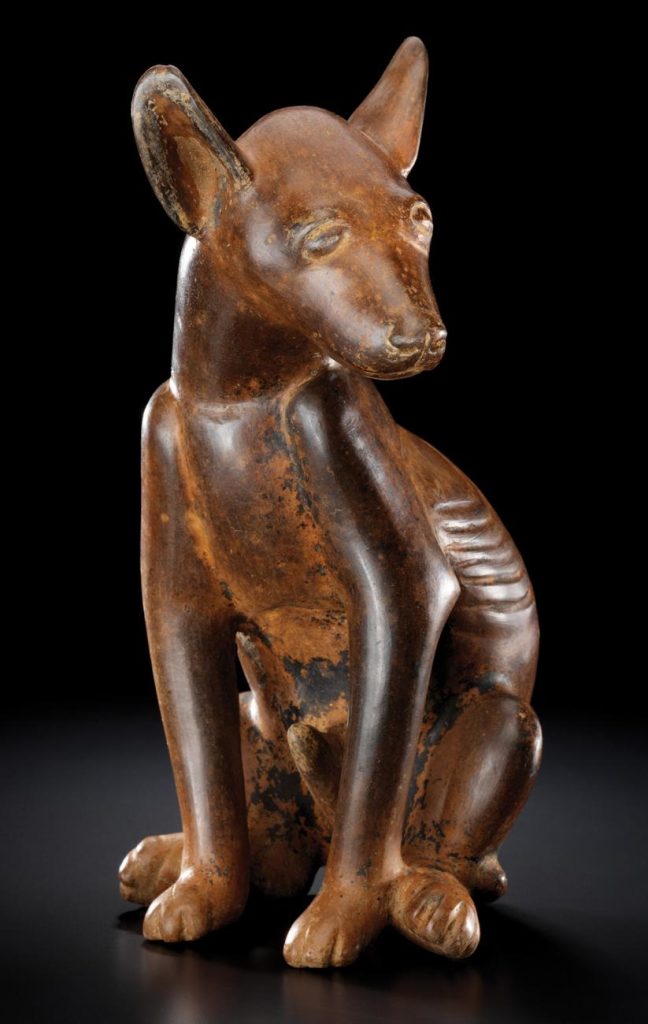
The Xoloitzcuintli has a long and fascinating history in Mexico. Ancient dog figures and archaeological finds show that dogs of this type have been present for thousands of years. The breed is associated with the Aztecs and with the god Xolotl, from whom the breed takes its name.
That deeper history deserves its own dedicated article, but the short version is simple: the Xolo is one of the foundational hairless dogs of the world, and one of the most historically significant.
How the Xolo Compares to Other Hairless Breeds
If you are exploring hairless breeds, the Xolo is worth comparing with the American Hairless Terrier, the Chinese Crested, and the Peruvian Inca Orchid. Each breed has its own personality, size range, and care needs.
The Xolo stands out for its ancient Mexican roots, primitive character, calm loyalty, and especially strong sense of quiet watchfulness.
Is the Xoloitzcuintli Right for You?
The Xoloitzcuintli can be a wonderful choice for someone who wants a loyal, elegant, and unusual companion. This breed is often a great fit for people who appreciate calm dogs, close bonds, and the distinctive beauty of hairless breeds.
It may be a less natural fit for someone who wants a highly outgoing dog that greets every stranger like a best friend or for someone who is not prepared for routine skin care.
Final Thoughts
The Xoloitzcuintli is more than an exotic-looking dog. It is one of the oldest and most meaningful hairless breeds in the world, with ancient roots, a dignified presence, and a loyal heart. For the right owner, the Xolo offers a rare combination of beauty, history, intelligence, and deep companionship.
If you are new to the special needs of these breeds, start with our Care and Keeping Guide for Hairless Dogs to learn what daily life with a hairless dog really involves.mperament.